
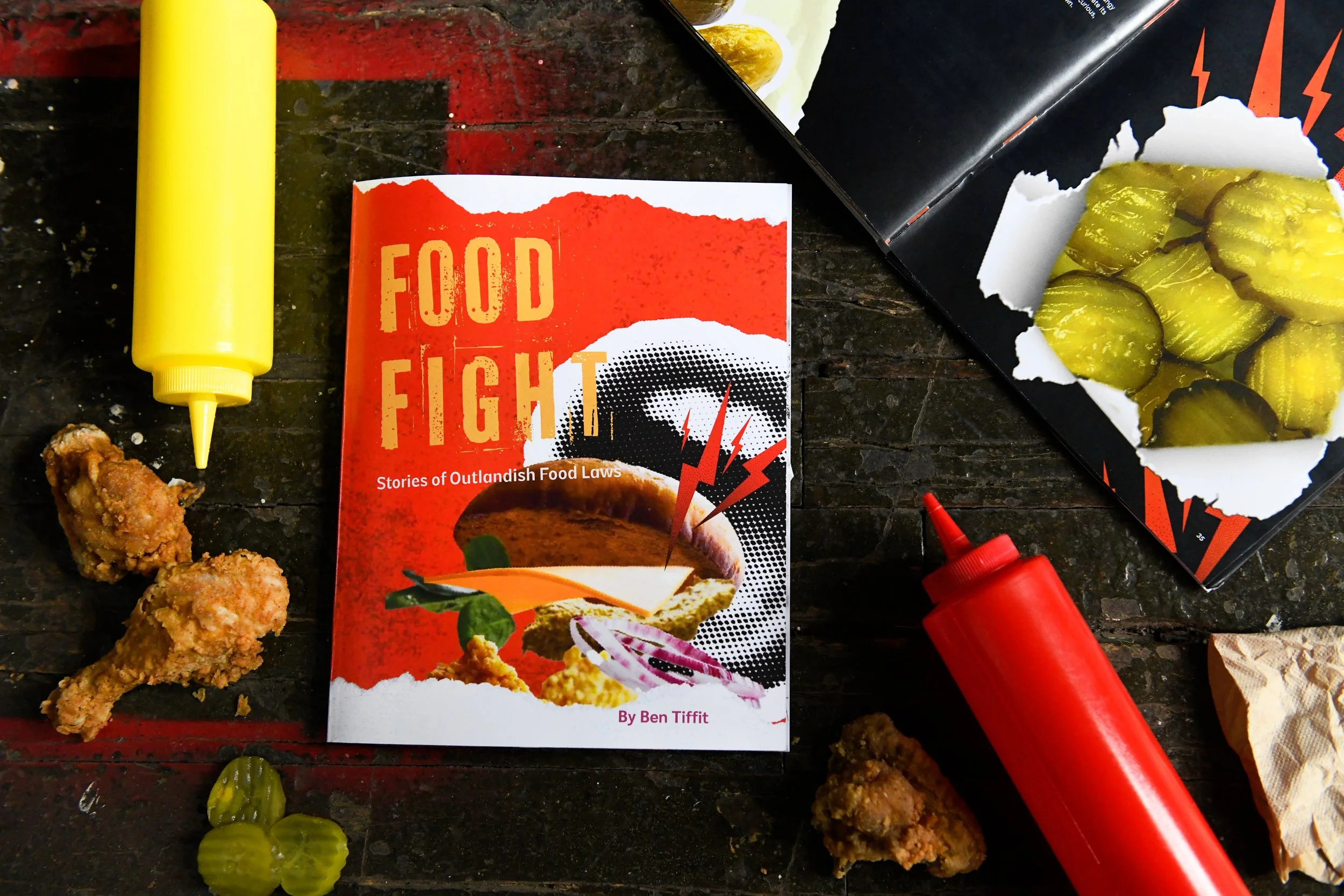
Food Fight a playful deep dive into America’s bizarre food laws, where culture, history, and absurdity collide.
Stories of Outlandish Food Laws
Overview
Food Fight explores a strange and often overlooked side of American culture through the lens of outdated and bizarre food laws. What started as a curiosity became a way to question how culture, regulation, and everyday habits intersect, turning something as ordinary as food into a collection of unexpected stories.
Scope of Work
+Publication Design
+Image Modification
+Visual Storytelling
+Market Research
+ Art Direction
+Illustration
-
Food is something we all connect to, but not everyone realizes how deeply it’s been shaped by law, tradition, and cultural quirks. Across the United States, there’s a history of strange and specific food regulations that feel almost unbelievable today.
There’s an opportunity to take something niche and unexpected and turn it into an experience that’s not only entertaining but also reveals a different side of American culture, one that people don’t usually see.
-
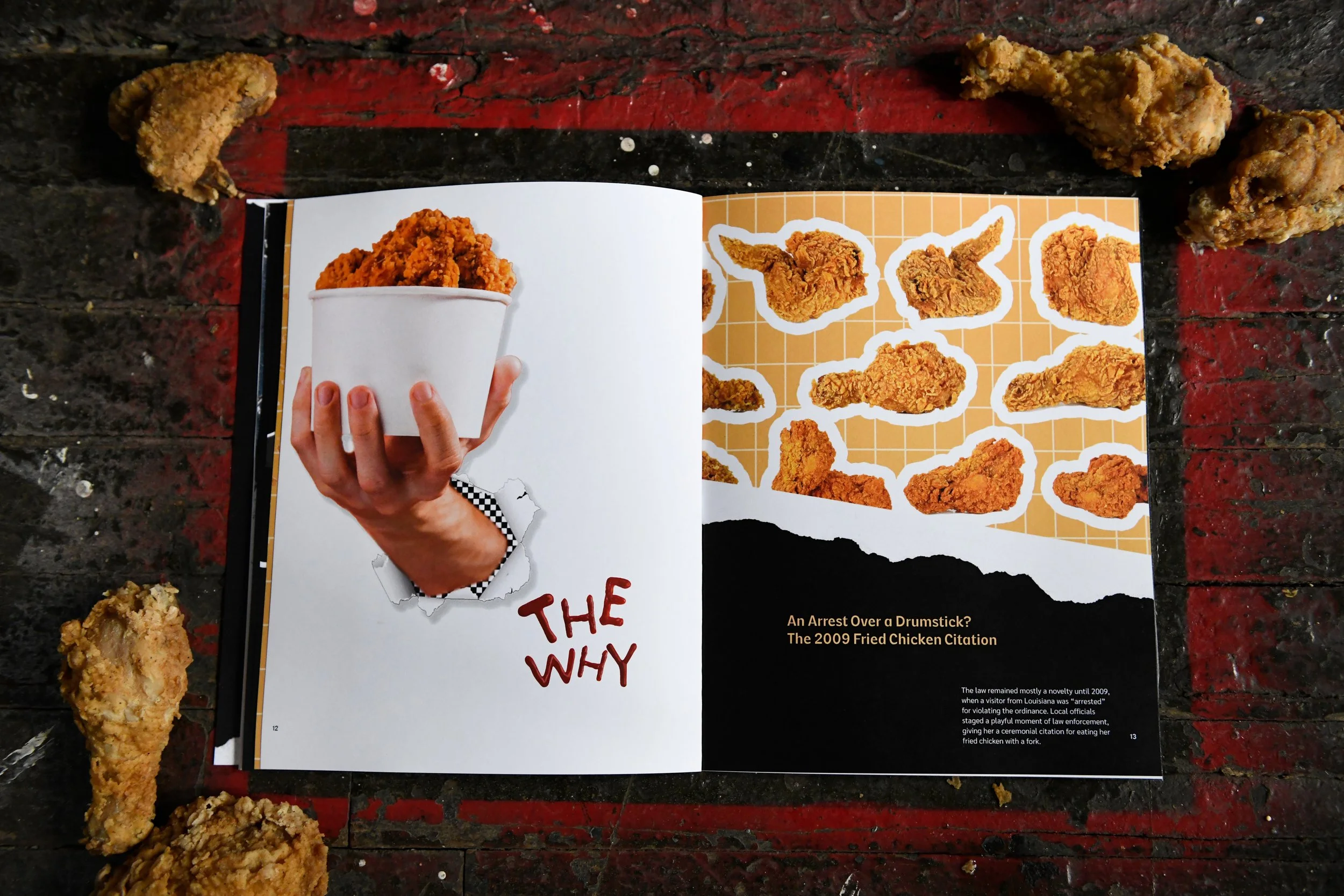
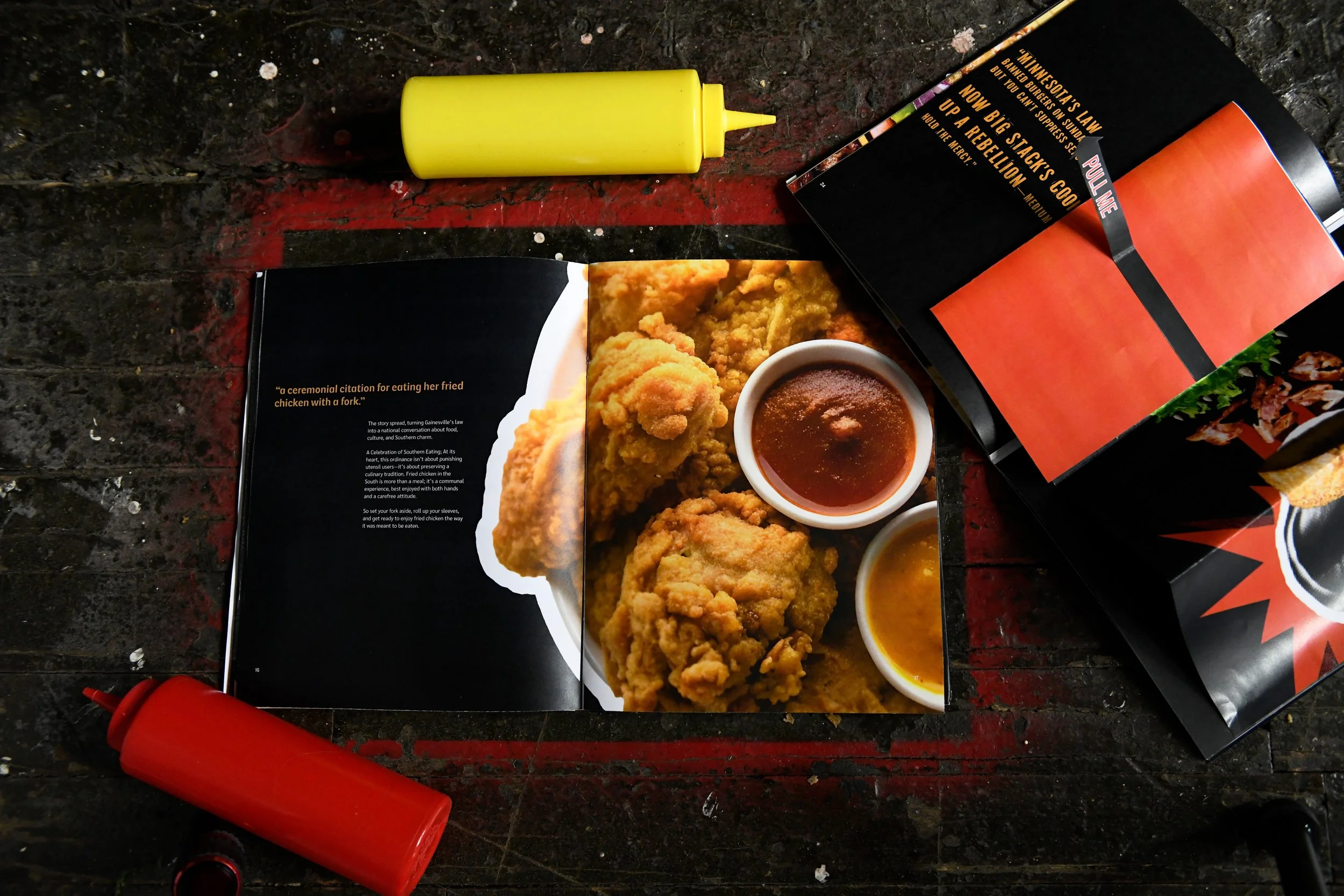
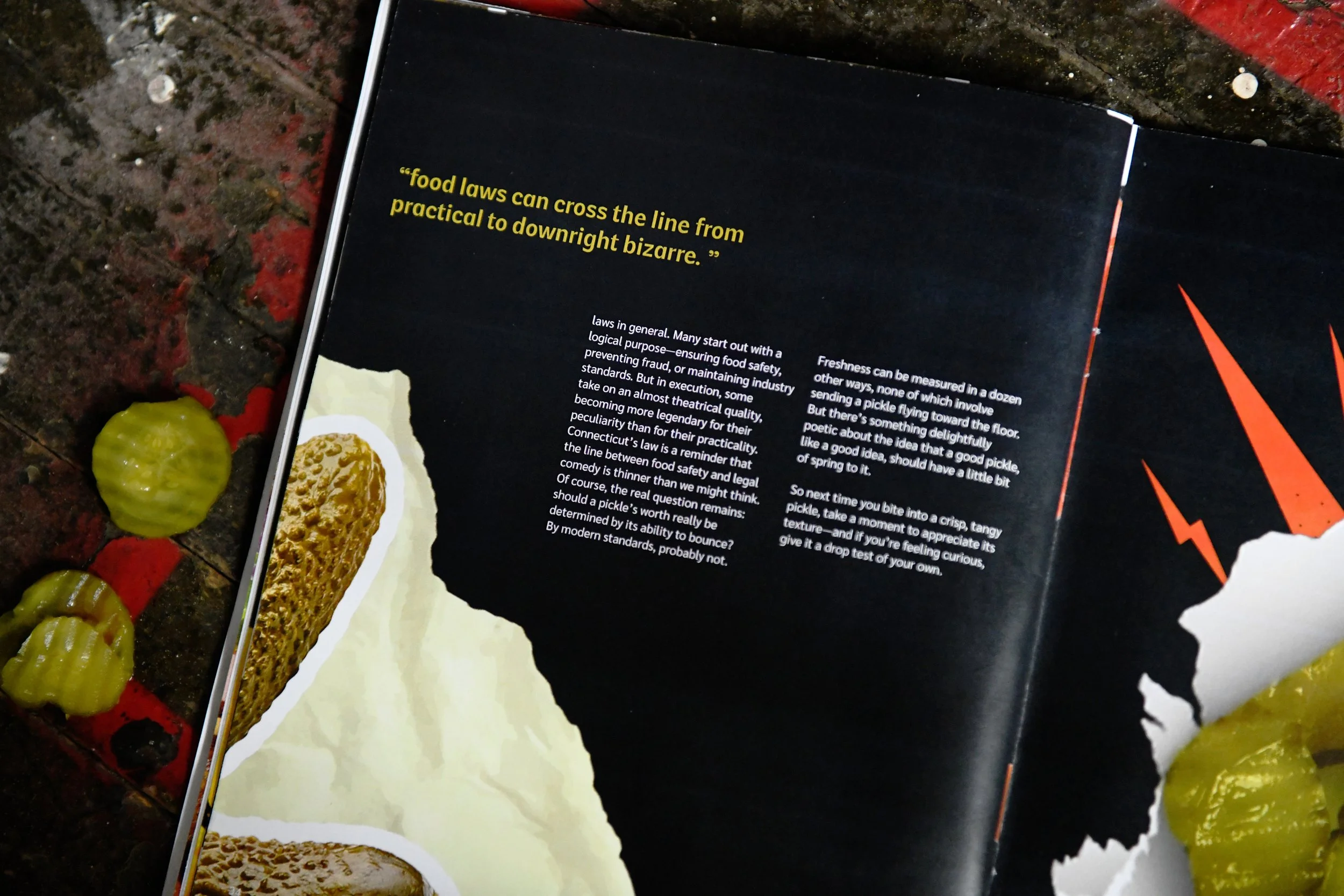
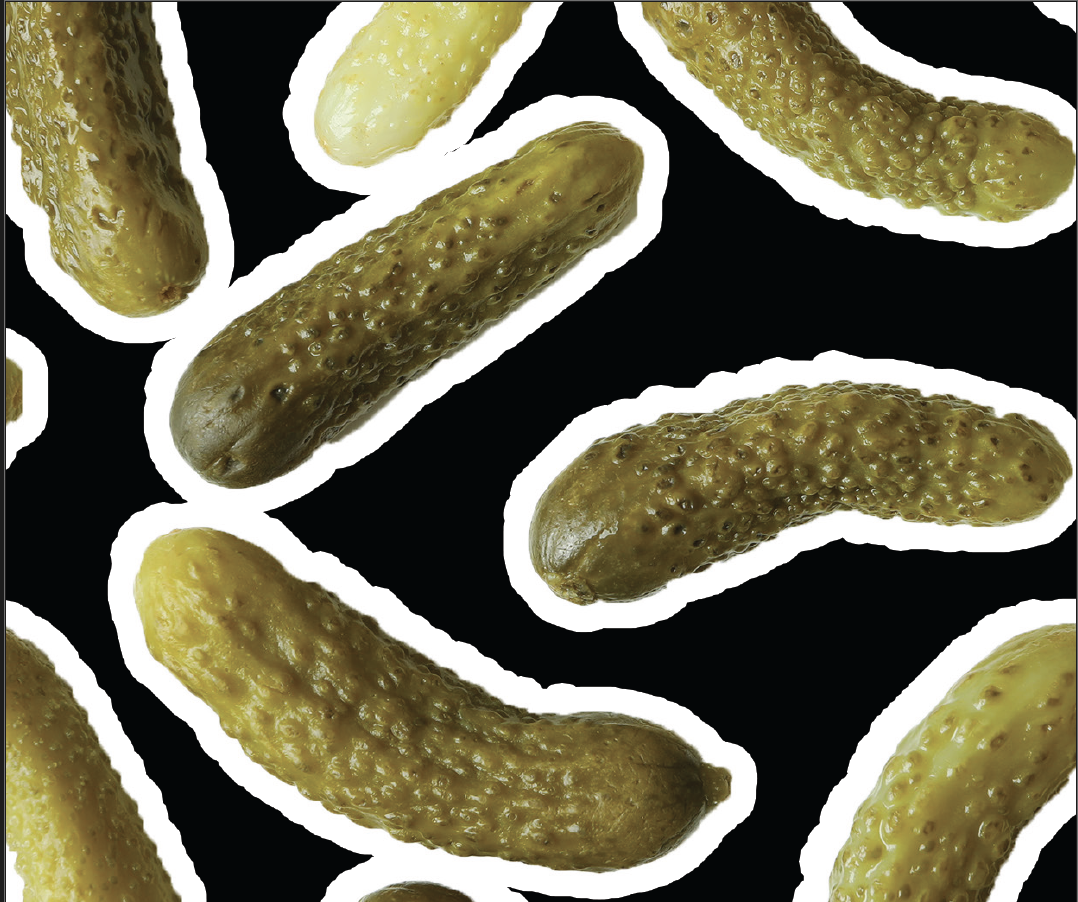
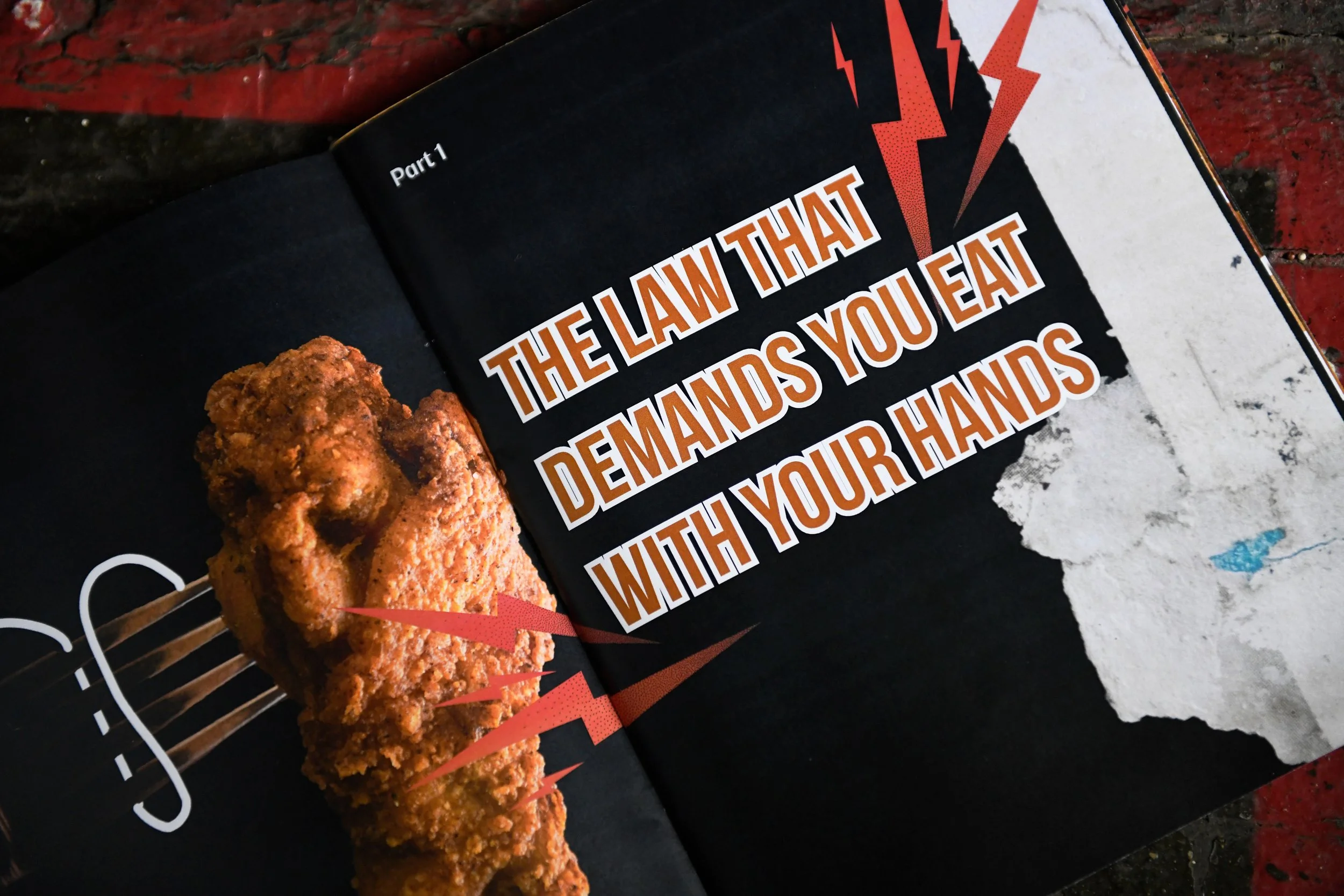
The United States has a long history of unusual food laws, many of which still exist or are remembered for how absurd they feel today. From the “pickle bounce test,” which determined whether a pickle could legally be sold, to laws in the South that discouraged eating fried chicken with a fork, these rules were often rooted in cultural norms, public health concerns, or specific moments in history like prohibition.
What makes them interesting isn’t just how strange they are, but what they reflect—regional identity, shifting values, and the ways everyday life has been regulated over time. Looking into these laws revealed a collection of stories that feel both humorous and oddly telling of a larger cultural history.
-
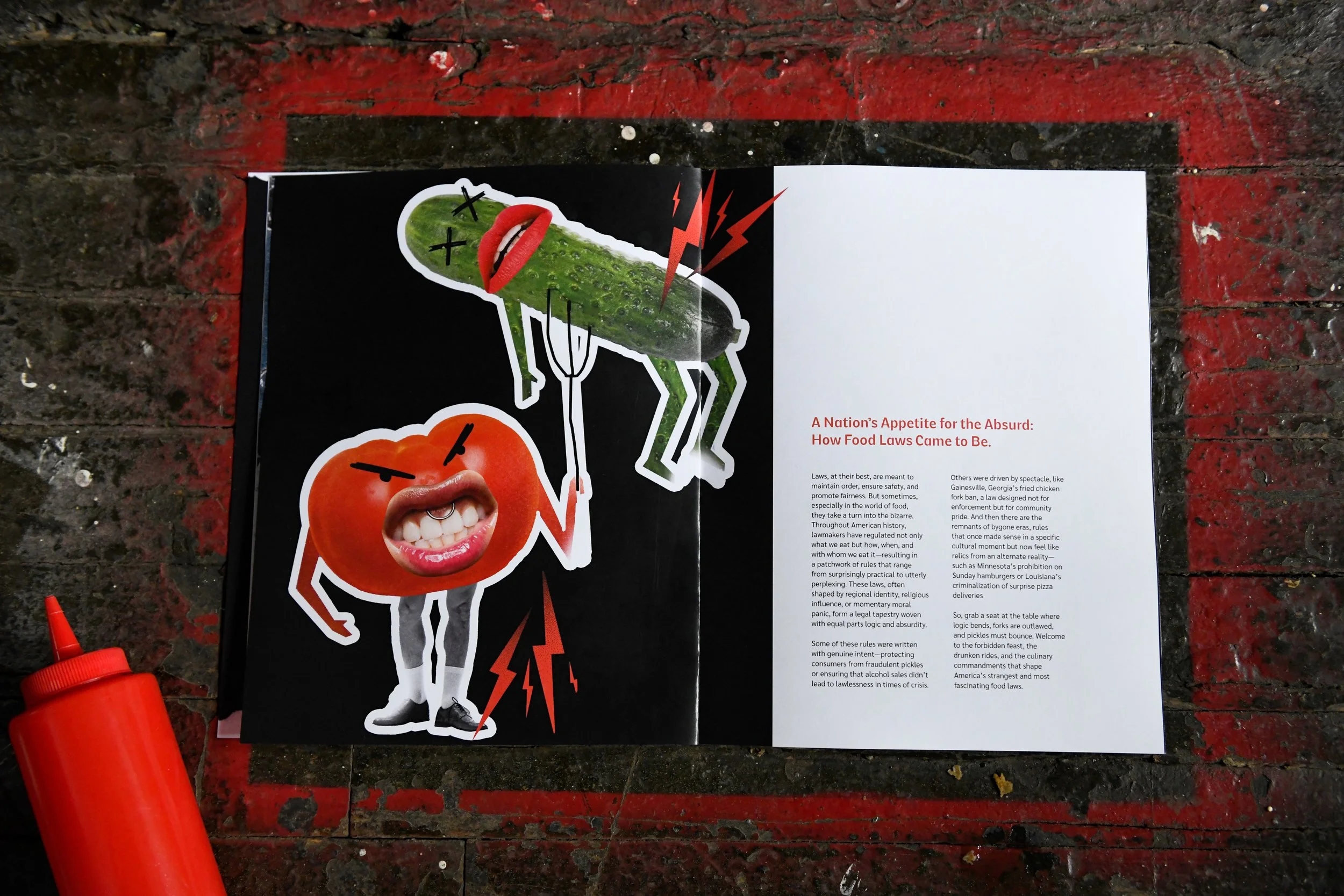
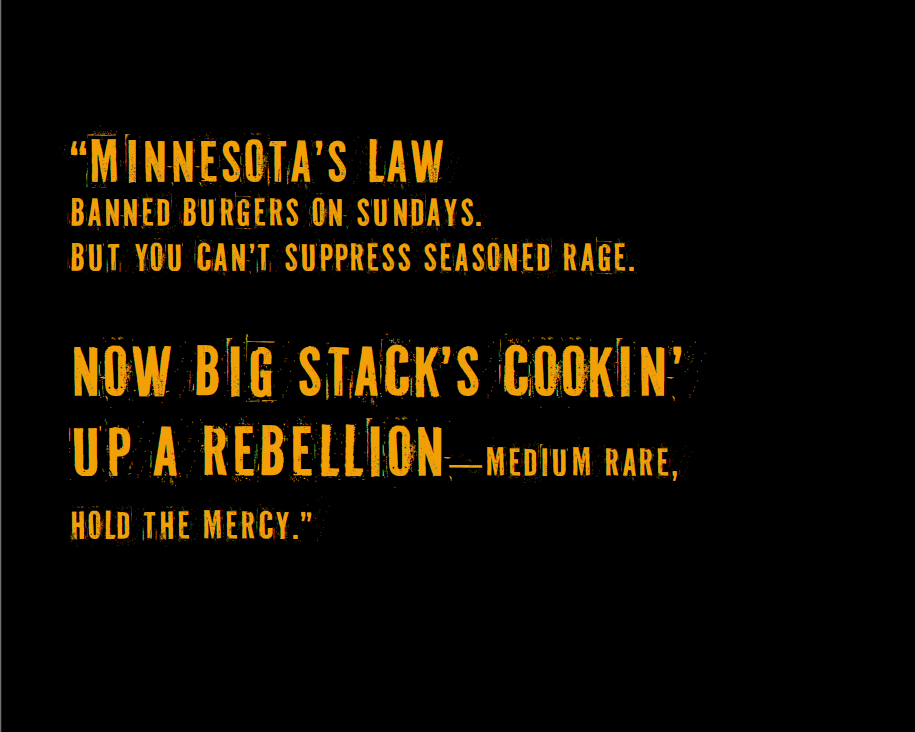
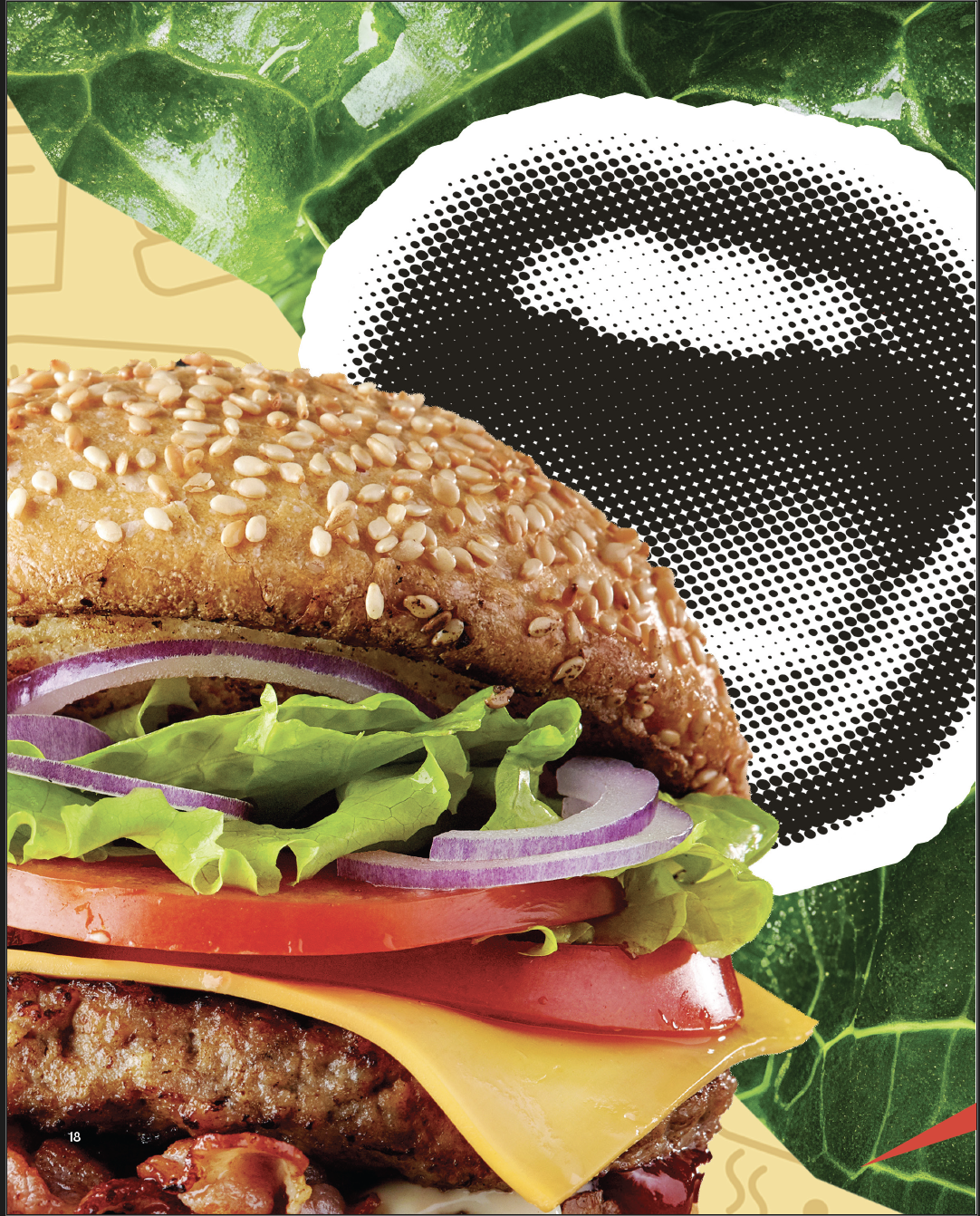
Food Fight is designed to bring these laws to life in a way that feels as bold and unexpected as the content itself. The book pairs food imagery with gritty, grunge-inspired visuals to create a contrast between something familiar and something slightly off.
The design leans into the absurdity of the laws, making them feel playful while still grounded in research. It becomes less about just reading and more about experiencing the content, inviting people to question, laugh, and engage with something they likely never knew existed. The result is a piece that turns overlooked history into something visually striking, memorable, and worth exploring.
Book Walk Through